
MOFEEDOUKA Womens High Top Sneakers Thick Shoe Laces PU Leather Comfort Platform Walking Shoes w
$55.99
View on Amazon →
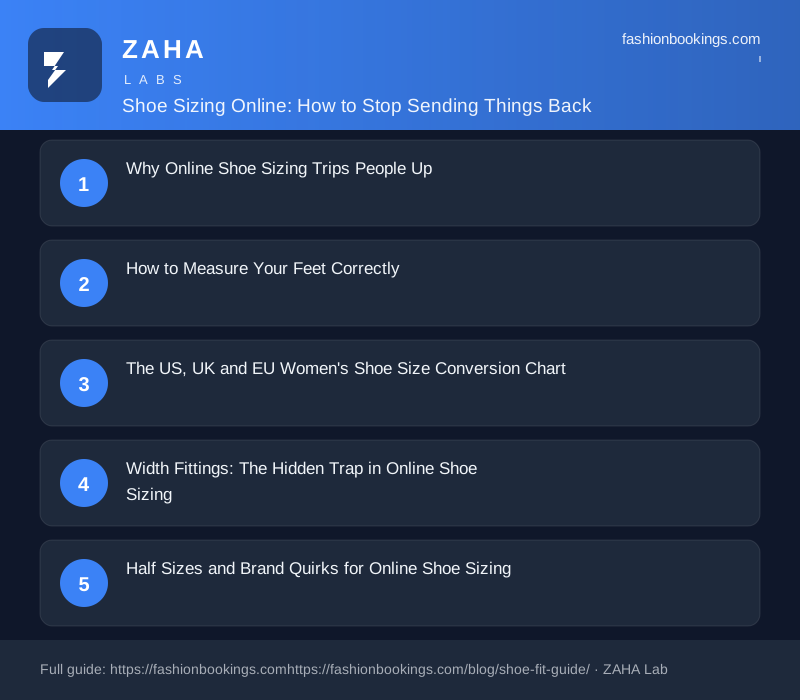
Published 17 September 2026 · updated 2026-09-17 · by FashionBookings
Nearly one in three online footwear orders is returned, and badly sized shoes account for a disproportionate share. Online shoe sizing becomes reliable once you know your heel-to-toe measurement in millimetres, your width fitting, and which brand's chart to trust — get those three things right and most returns stop.
The core problem is that "size 7" is not a universal standard. A US women's 7 corresponds to approximately UK 4.5 or 5 and EU 37.5 or 38 — but conversions like that are guidelines, not guarantees. No two brands use identical lasts, and even within a single brand, a summer sandal and a winter boot labelled the same size will often fit differently.
The second problem is what online listings actually show. Most photograph shoes from the side at a flattering angle, list a single size number, and omit foot-length data entirely. A shopper relying on a size label they learned years ago, ordering from a brand they have never tried, is essentially guessing — and most footwear returns are the result of exactly that process.
There is also a psychological trap: the size you think you are versus the size you actually are. Feet change over time — after pregnancy, with age, and with long-term changes in footwear habits. Measuring periodically is not just for online shopping novices; it is how you stay accurate as your baseline shifts.
Accurate measurement takes about four minutes and requires only a sheet of A4 paper and a pencil.
Feet expand throughout the day — sometimes by as much as half a size in warm weather or after long periods of standing. Measure in the evening when your foot is at its largest. A shoe fitted to your evening measurement will be comfortable all day; one measured at 8 am may be noticeably snug by mid-afternoon.
Once you have your heel-to-toe measurement, use the specific brand's published size guide rather than a third-party conversion chart. Most reputable retailers include one in a tab on the product page. If a brand does not publish one, take that as a signal to read verified reviews carefully before ordering.
Use this table as a starting point, then confirm against the brand's own guide before ordering.
| US Size | UK Size | EU Size | Approx. Foot Length (mm) |
|---|---|---|---|
| 5 | 2.5 | 35 | 219–222 |
| 5.5 | 3 | 35.5 | 222–225 |
| 6 | 3.5 | 36 | 225–229 |
| 6.5 | 4 | 37 | 229–233 |
| 7 | 4.5 | 37.5 | 233–237 |
| 7.5 | 5 | 38 | 237–241 |
| 8 | 5.5 | 38.5 | 241–245 |
| 8.5 | 6 | 39 | 245–248 |
| 9 | 6.5 | 40 | 248–252 |
| 9.5 | 7 | 40.5 | 252–256 |
| 10 | 7.5 | 41 | 256–259 |
Foot-length ranges are approximate and vary between brand lasts. Luxury labels, specialist footwear brands, and many East Asian brands operate outside this grid — always confirm with the brand's specific guide.
If your measurement puts you between two sizes in the table, use the foot-length column as the tiebreaker rather than rounding on the size label alone.
Length conversion is what most shoppers focus on, but width causes an equal number of returns — and it is checked far less often.
Most online listings photograph shoes from the side and describe only length. A shoe that is the right length but the wrong width will be painfully tight or unacceptably loose — and the product photos will not reveal this. Look for the width fitting code in the listing description: standard (B/M in US notation), wide (D/W), or extra-wide (EE/2E). If no code appears, check verified buyer reviews for mentions of narrow fit or tightness across the ball of the foot. Skipping this step is the single most common cause of shoe returns that a size conversion chart cannot prevent.
Women's foot width varies considerably, and the standard last used by most brands is calibrated for a middle range. If standard-fit shoes have consistently felt tight across the forefoot — especially by mid-afternoon — searching explicitly for wide-fit options is worthwhile. Wide-fit versions of trainers, boots, and court shoes exist across most major retailers, though they are not always prominent on the main category page. Adding the words "wide fit" to your search terms is usually enough to surface them.
Half sizes matter more in some styles than others, and knowing which way to go when you are between sizes avoids a second order.
Trainers and running shoes are typically designed with a thumb's-width of clearance at the toe — roughly 10–12 mm. If your measurement puts you at the upper edge of a size, go up half. A snug trainer becomes uncomfortable quickly under movement and cannot be broken in the way a leather upper can.
Pointed-toe heels reduce the usable toe length because the upper tapers before the sole does. Sizing up half from your measured length is common practice, particularly if your second toe is longer than your big toe.
Ankle boots introduce a second fit variable: shaft circumference. A boot that fits the foot perfectly may still be too tight or too loose around the calf. Check the shaft circumference measurement in the listing — if it is absent, read reviews specifically for calf-fit comments before ordering.
Sandals generally size true, especially styles with adjustable buckle straps, which compensate for small differences in foot length. Fixed-strap mules are less forgiving — size up if you measure at the upper edge of a size. As a general rule for any new brand: order from a retailer with free returns and a generous return window. The inconvenience of a second order is lower than the cost of a shoe that hurts and never gets worn.
Knowing what a good listing looks like helps you decide how much confidence to place in it before you check out.
A listing worth buying from will include:
If a listing shows only a size label with no measurement data, treat that as a warning. Brands that publish detailed fit data take sizing seriously; those that do not are passing the uncertainty to you. Either contact the retailer before ordering or accept that you are taking a guess.
The measurement discipline that cuts shoe returns pays dividends across everything else you order. Tops and knitwear vary between brands at least as much as shoes do, and the same principle applies: measure first, check the brand's own guide, and read recent fit-specific reviews.
Ribbed knit fabrics stretch and recover, so a style like the Bodosalia Womens Puff Short Sleeve Sweater (crew neck, ribbed knit pullover blouse, 4.4 stars, £14.86) can often be sized down one if you prefer a closer fit — the fabric gives without losing its shape. A relaxed-cut knit such as the EVALESS Women's Striped Short Sleeve Knit Sweater (crew neck, colour block, relaxed fit, soft knit, 4.6 stars, £11.14) is cut with deliberate ease, so ordering your usual size gives the intended silhouette. For lightweight long-sleeve layering, the Zeagoo Womens V Neck Sweater (button detail, lightweight pullover blouse, 4.5 stars, £23.55) lists a bust measurement alongside the size label — that number is what you should check rather than the S/M/L designation.
For something slightly more structured, the ANRABESS Women's Long Sleeve Cropped Crew Neck Lightweight Sweater (business casual, short pullover, 4.4 stars, £14.86) is explicitly cropped, so the listed length in centimetres matters as much as the bust measurement when layering over high-waisted trousers or skirts.
Across all of these, the logic is identical to footwear: the label is a starting point, the measurement is what counts.
Every product linked from this page meets a minimum 4.3-star verified rating. We look at fit-specific feedback within reviews — not just headline scores — and we prioritise brands that publish detailed measurement data in their listings, because that transparency is a reliable indicator that a brand takes sizing seriously. Price points are assessed for value relative to construction and category standards.
This approach works best for shoppers who know their measurements but have been caught out by brand-to-brand variance, anyone moving from in-store to online buying for the first time, and people shopping across UK, US, and EU retailers where the same foot lands in differently labelled sizes.
You may still benefit from in-person fitting if a medical condition — bunions, hammertoes, post-surgical changes — means standard lasts do not accommodate your foot; if you are buying prescription or orthopaedic footwear that requires specialist measurement; or if you need specialist shoes such as dance or climbing footwear, where the fit convention differs significantly from everyday styles.
This guide will not eliminate every return. Some brands simply do not publish enough data to size confidently from a listing alone, and a small number of styles fit unusually regardless of charts. For the majority of online shoe purchases, though, measuring your foot, checking the brand's guide, and reading a handful of fit-specific reviews before checkout is enough to buy right first time.


US women's size 8 converts to approximately UK 5.5 and EU 38.5, with a foot length of roughly 241–245 mm. These conversions are starting points, not guarantees — some brands run half a size small or large across their entire range. Always measure your foot in millimetres and cross-reference against the specific brand's size guide before ordering. The conversion chart gets you into the right ballpark; the brand's own guide gets you the right size.
For trainers and running shoes, size up — these styles are designed with clearance at the toe, and a snug fit becomes uncomfortable under movement. For heeled shoes and courts, sizing up half is generally safer than going down. For sandals with adjustable buckle straps, staying at your lower measurement usually works since the buckle compensates for small differences. When genuinely uncertain, check verified buyer reviews for fit-specific comments before confirming the order.
Brand-level sizing variance is the most common cause — the last shape used by one brand differs from another's even at the same size label. Width fitting is the second culprit: a shoe that is the right length but the wrong width cannot fit comfortably regardless of the number on the box. Style also matters — pointed toes, stiff uppers, and a narrow toebox all reduce the effective fit independently of the printed size. Measuring your foot and checking the brand's guide eliminates most of these surprises.
Yes, especially if you have a wider or narrower than average foot, or if standard-fit shoes have ever felt tight across the ball of the foot. Width codes — B/M for standard, D/W for wide, EE for extra-wide — are not always prominent in listings. If none appears, check verified buyer reviews for mentions of narrow fit or tight forefoot. Two minutes of reading prevents a return that would otherwise be near-certain for anyone outside the standard width range.
As an Amazon Associate we earn from qualifying purchases. Prices and availability are accurate as of the date shown and are subject to change — the price on Amazon at checkout is the one that applies.
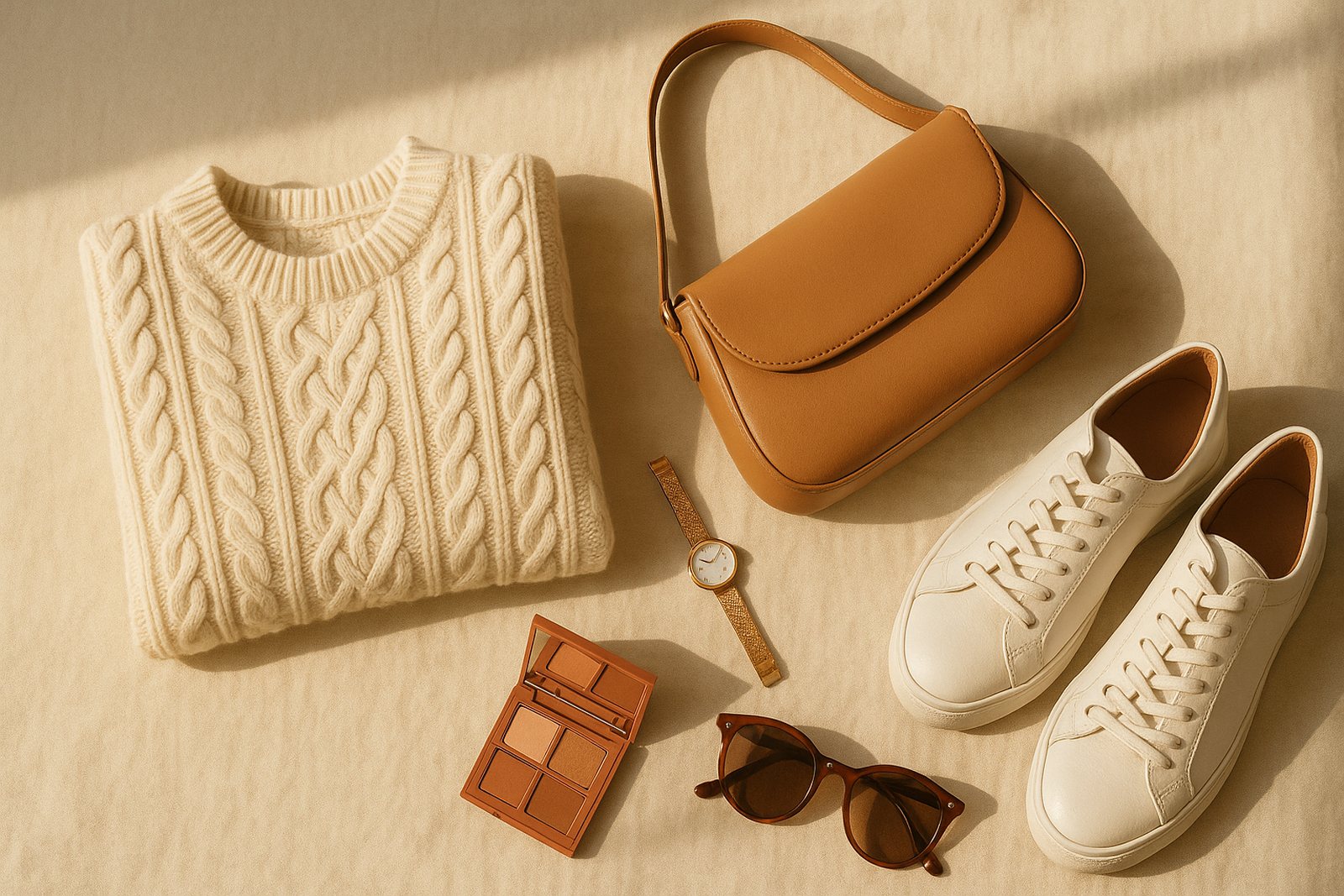
Learn how to accessorise a plain outfit: the one-metal rule, two leather tones maximum, and the three accessories worth buying fir
Women's US fashion worth buying this month: knit tops and sweaters from £9.99–£31.69, rated 4.1–4.6 stars, plus how to spot fake d
Find the best women's activewear leggings sets for under $40 — what to check for fabric quality, support, fit, and value before yo