
GRACE KARIN Womens Casual Dress, Business Office Work Homecoming Dresses | 2026, Cap Sleeve, Zip
$49.99
View on Amazon →
Published 17 September 2026 · updated 2026-09-17 · by FashionBookings
Most women wear roughly 20 per cent of their wardrobe 80 per cent of the time — and in an office context, that figure skews even further. The five office outfit formulas that always work — tailored trouser and relaxed top, midi skirt and knit, shift dress with a layer, wide-leg trousers with a structured jacket, and monochrome stacking — each follow the same logic: one structured piece, one complementary piece, and a finishing element that pulls the proportion together.
Decision fatigue is real, and it starts well before you arrive at your desk. The fewer choices you have to make before 9am, the more mental energy you preserve for the actual job. A formula is not a uniform — it is a repeatable structure you can restyle with different colours, fabrics, and accessories so it never feels stale.
Each of the five formulas below pairs one strong base piece with a complementary piece that does something different — adds volume, contrasts texture, or shifts the length — and a third element that finishes the silhouette. Once you understand the structure, shopping becomes far more deliberate and you stop buying pieces that combine with nothing you already own.
This is the workhorse of office dressing. The contrast between a structured, well-cut trouser and a slightly looser blouse or jersey top creates effortless balance: one piece does all the tailoring, the other provides ease. It is also the most adaptable formula across dress codes — dress it up with heels and a blazer, or keep it relaxed with a flat shoe and an untucked hem.
Choose something that tucks cleanly at the front. A partial French tuck — tucked at the front only — keeps the waistband visible without looking over-styled. Prioritise natural fibres or breathable jersey; synthetics trap heat under office lighting and become uncomfortable by mid-afternoon. A subtle V-neck or wrap front adds visual interest at the collar line, which matters when most meetings now happen on screen.
Start with the trouser in a neutral — charcoal, navy, camel, or stone — and let the top carry any colour or print. This single habit means every top you buy will automatically work with every trouser you own, doubling the number of combinations available from the same number of garments.
The midi length flatters most body types and reads as polished without being stiff. Paired with a fine-knit jumper or ribbed polo, it hits a sweet spot between smart and comfortable that works across most UK office environments — from professional services to creative agencies. It is also one of the most temperature-friendly formulas: the knit adjusts the warmth level season by season without changing the silhouette.
The skirt fabric matters enormously here. A woven midi in crepe, satin, or suiting cloth presents more formally and photographs well; a jersey midi is more relaxed but still pulled-together. Crepe is particularly useful in warmer offices — it does not crease heavily, breathes well through a long day, and holds its shape without pressing.
For the knit, keep the weight proportional to the skirt. A chunky cable knit over a sleek satin midi creates a clash in formality levels; a fine merino or cotton-blend knit keeps things cohesive. Check the care label before buying — machine-washable knits are worth the investment because you will reach for them constantly and hand-washing every few days quickly becomes a chore.
Tuck the knit fully or try a half-tuck. A low block heel or a pointed flat elongates the leg beneath the midi hem. Avoid oversized trainers with this formula unless your workplace is explicitly casual — they tip the balance decisively from work to weekend.
A well-cut shift dress is the closest thing in women's workwear to a man's suit: one piece, fully dressed. A layer — a blazer, a longline cardigan, or an open-front jacket — adds structure on formal days and removes easily when the office runs warm. For commuters, this formula is particularly practical: a single dress takes up far less bag space than a separate top and skirt, and there is nothing to come untucked on the journey in.
A shift dress that is even slightly too wide across the shoulders or too tight across the hips immediately reads as ill-fitting, and no amount of clever styling rescues it. Before ordering online, check the size guide against your shoulder measurement specifically — the majority of shift dress returns come down to shoulder width rather than overall size.
A matching blazer turns a shift dress into a suit-adjacent look for client meetings or formal presentations. A contrasting blazer — different colour or fabric — is more versatile day-to-day and far easier to style across multiple outfits. Linen or ponte blazers are more forgiving than stiff canvas styles and pack down well for commuting. Look for at least two inside pockets; a phone and a small card wallet make a significant practical difference across a long day without a bag at your side.
Wide-leg trousers have moved firmly from trend to wardrobe staple. They are comfortable for long days, inherently elegant when the fabric is right, and they pair beautifully with a fitted, structured jacket — a combination that commands attention without feeling stiff or dated.
| Element | What Works | What to Avoid |
|---|---|---|
| Wide-leg trouser fabric | Crepe, wool-blend, heavy jersey | Lightweight cotton (loses shape and creases quickly) |
| Jacket fit | Nipped at the waist or straight-cut to the hip | Boxy or oversized (loses the contrast with the wide leg) |
| Footwear | Heeled boot, loafer, point-toe flat | Chunky trainer, ankle boot that cuts the leg line short |
| Colour pairing | Tonal — dark plus slightly darker | Competing prints or patterns in both pieces at once |
The key principle: one piece carries the volume, the other provides definition. Wide leg plus fitted jacket. Fitted-waist wide leg plus a slightly more relaxed jacket. Never both pieces wide and unstructured simultaneously — you lose all proportion and the look tips into shapeless rather than relaxed.
Wide-leg trousers and a sharp jacket are higher-maintenance to travel in than other formula combinations. If you commute by tube or cycle, choose a fabric — such as ponte or scuba — that resists creasing better than woven wool. Alternatively, fold the trousers flat in a garment bag and change on arrival; it adds two minutes to your morning but keeps the look pristine for the whole day.
Head-to-toe one colour — or close tonal variations of it — is one of the most effortlessly confident formulas in office dressing. It lengthens the silhouette, reads as intentional even when it took five minutes to assemble, and photographs cleanly on video calls where busy patterns and clashing tones are amplified.
This formula works particularly well in:
The key to making monochrome look deliberate rather than accidental is texture variation. A monochrome outfit falls flat when every piece is the same fabric weight. Pair a matte crepe trouser with a silky or satin-finish blouse, or a chunky knit with tailored trousers in the same colour family. The contrast keeps the eye moving and prevents the look reading as a matching set, which can feel more like a costume than a considered outfit.
The best-looking office outfit at 8am is the one that still looks good at 6pm. Understanding how fabrics behave through sitting, commuting, and warm meeting rooms helps you shop far more deliberately.
"Dry clean only" on a piece you intend to wear multiple times a week adds up quickly in both cost and inconvenience. Look for machine wash cold — or at minimum hand wash — on anything you plan to rotate heavily. Steaming rather than ironing removes creases from most modern office fabrics without the risk of shining or scorching delicate finishes.
You do not need all five formulas in place at once. A more practical approach:
Before adding any new piece, check that it works with at least two items you already own. If it does not combine with anything existing, it is filling a gap that does not actually exist in your wardrobe. A women's clothing collection built on these five formulas typically sits at eight to twelve garments — a wardrobe that functions rather than one that merely fills a rail.


Smart casual sits between formal business dress and jeans-and-T-shirt. In practice it means well-fitting trousers or a skirt rather than jeans, a blouse or structured knit rather than a slogan tee, and clean polished footwear rather than trainers. All five formulas in this guide sit comfortably within smart casual. If in doubt, err slightly more formal — it is always easier to remove a blazer than to add structure you have not brought with you.
Focus on the top half — everything below the waist is invisible on most calls. A solid or tonal top in navy, burgundy, or forest green reads clearly on camera; fine patterns and very pale or white fabrics can wash out under artificial light. Keep the neckline simple so your face stays the focal point. Blur or tidy your background so it does not compete with what you are wearing — the background affects how your outfit registers as much as the outfit itself.
Yes, provided the fabric and accompanying pieces are right. Wide-leg trousers in a tailored wool-blend or heavy crepe, worn with a fitted jacket and a closed-toe heel or polished loafer, read as formal rather than casual. The formula breaks down when the fabric is lightweight and drapes loosely, or when both the trousers and the jacket are relaxed simultaneously. Keep the jacket structured and the footwear polished and the look stays firmly professional.
Variation comes from three sources without requiring new garments: shoes (a point-toe flat versus a block heel shifts the mood of the same outfit significantly), accessories (a single statement earring or a scarf changes the entire read), and layering order (a blazer worn open versus closed, or belted over the top, creates a distinct silhouette). If you want to introduce colour, do it in a top or scarf rather than a base piece — neutrals below, colour above is the simplest rule that never fails.
As an Amazon Associate we earn from qualifying purchases. Prices and availability are accurate as of the date shown and are subject to change — the price on Amazon at checkout is the one that applies.
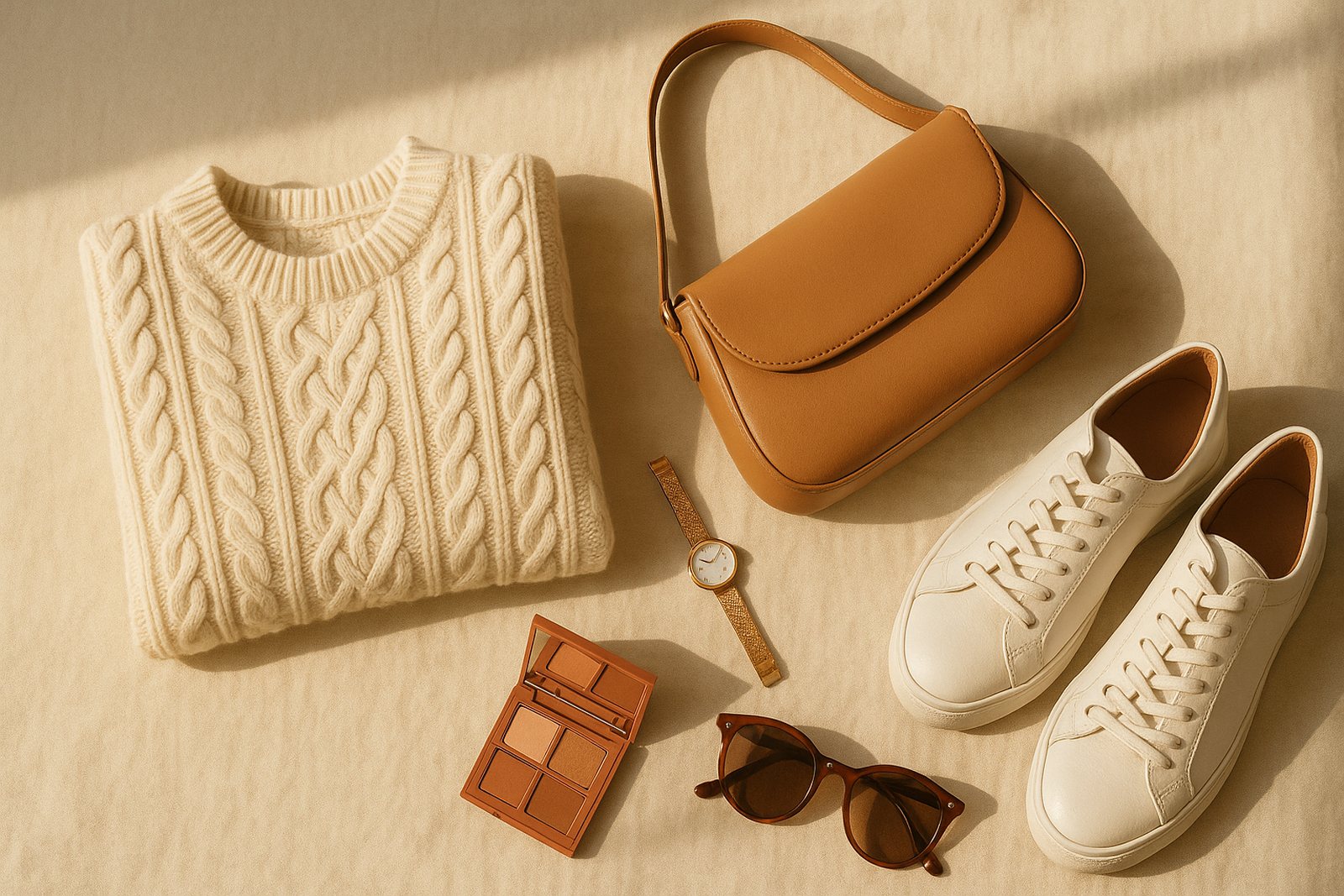
Learn how to accessorise a plain outfit: the one-metal rule, two leather tones maximum, and the three accessories worth buying fir
Women's US fashion worth buying this month: knit tops and sweaters from £9.99–£31.69, rated 4.1–4.6 stars, plus how to spot fake d
Find the best women's activewear leggings sets for under $40 — what to check for fabric quality, support, fit, and value before yo