
LookbookStore Capri Jeans for Women Wide Leg Trendy High Waisted Baggy Straight Casual Summer St
$22.99
View on Amazon →
Published 17 September 2026 · updated 2026-09-17 · by FashionBookings
Most people buy jeans by waist size alone — and then wonder why they gap at the back or pull across the thighs by mid-afternoon. The right jeans fit comes down to four measurements, your preferred rise, and the stretch percentage in the fabric: get those three things aligned and the guesswork disappears for good.
Jeans sizing was never standardised across the industry. A "32-inch waist" in one brand can measure anywhere from 30.5 to 33.5 inches when you lay the waistband flat — a difference that turns a comfortable pair into a squeezing nuisance by lunchtime. UK and EU dress sizing adds another layer of confusion: a UK size 12 is roughly an EU 40, but neither label tells you much about the actual inseam, hip, or thigh dimensions inside the garment.
The problem compounds because most of us learned to shop by waist and inseam, while ignoring the rise — the distance from the crotch seam to the waistband. Change the rise and the same waist size fits completely differently. A mid-rise sits near the natural waist; a low-rise settles on the hips. Neither is wrong, but wearing the wrong one for your torso length is precisely why so many pairs feel awkward even when the label matches your usual size.
Before you buy — especially online — take these four measurements and write them down before you open a product page. Brand size guides that compare all four will serve you far better than a waist number alone.
Waist: Measure at the level you intend to wear the waistband. If you prefer jeans on the hip, measure the hip — not the natural waist.
Seat/Hips: Measure at the widest point, roughly 20–23 cm (8–9 inches) below the natural waist. This is the measurement most sizing charts underweight, and the one most likely to cause real fit problems. A waistband that fits perfectly can still pull across the seat if your hip-to-waist ratio differs from the brand's standard block.
Inseam: Inside leg from crotch to ankle bone. Knowing your full inseam lets you judge whether a 28-, 30-, or 32-inch leg will fall where you want it — and whether a pair labelled "cropped" will actually hit at the intended point on your leg.
Thigh circumference: Measure around the fullest part of the thigh, roughly 5 cm (2 inches) below the crotch seam. For slim or skinny fits, this is the measurement most likely to cause drag lines, discomfort, or restricted movement.
Most brands publish full size guides on their product pages. Compare your hip and thigh against the chart — not just your waist — before adding anything to your basket.
Rise is the distance from the crotch seam to the top of the waistband at the front. It controls where the jeans sit on your body and how the waistband interacts with your torso proportions.
| Rise label | Typical front rise | Where it sits | Works well for |
|---|---|---|---|
| Low rise | Under 23 cm (9 in) | Hip bone | Shorter torsos, cropped tops |
| Mid rise | 23–28 cm (9–11 in) | Between hip and natural waist | Most body types; the most versatile option |
| High rise | 28–33 cm (11–13 in) | Natural waist or just above | Longer legs, tucked-in tops, post-pregnancy comfort |
| Ultra high | 33 cm+ (13 in+) | Well above natural waist | Fashion-forward looks, hourglass silhouettes |
If you are shorter-waisted — a compact distance between your lowest rib and your hip — a high rise will cut across your midsection and feel restrictive even at the correct waist size. Mid-rise is typically more comfortable for shorter torsos. Longer-waisted bodies can carry a high rise without the persistent gapping-at-the-back problem that affects people with a shorter torso-to-hip ratio.
Understanding what each cut is designed to do saves you from buying a shape that works against your body or wardrobe.
The leg tapers from hip to ankle. A good skinny jean needs 1–3% elastane (or an equivalent stretch fibre) to allow comfortable movement — rigid denim in a skinny cut restricts walking and sitting to an uncomfortable degree. Works well for lean to average thigh circumferences. Above a certain thigh measurement, skinny-cut jeans pull taut across the quad and create horizontal drag lines that indicate the fit is simply too narrow.
Narrower than a classic straight through the thigh, tapering slightly but staying consistent from knee to hem. More forgiving across the thigh than skinny. Generally the most neutral option for a smart-casual wardrobe, and straightforward to style with both trainers and leather shoes.
Consistent width from hip to hem — neither loose nor fitted. The classic workhorse cut that looks tidy without looking tight. Straight-leg jeans are also the easiest to hem cleanly without losing their intended proportion, which matters if you are petite.
Straight to the knee, then opens out slightly (bootcut) or more dramatically (flare). The opening at the hem visually balances wider hips and thighs, and is one of the few cuts that genuinely flatters a pear-shaped silhouette. Wear at full length or with a heel — too short and the visual effect is lost entirely.
Extra room through the thigh and hip, with a wide, straight or gently tapered leg to the hem. These cuts need a defined waistline — a belt, a tucked-in top, or a cropped layer — to avoid looking shapeless. Currently most popular in a high-rise configuration that creates a clean, unbroken line from waist to floor.
The fibre composition affects how a pair of jeans fits on the day you buy them, and how well they hold their shape after months of regular wear.
100% cotton (rigid denim): Stiff and structured when new; shapes to the body over time. The waist can ease by a centimetre or so after a full day's wear. Many people find it worth sizing down one step in rigid denim, knowing it will relax. Do not size down more than one step — a truly too-tight pair will not ease enough to become comfortable and the stress accelerates seam wear.
Stretch denim (1–2% elastane): The most common construction on the UK high street. The fabric moves with you during the day and recovers its shape after washing. A small elastane percentage makes a significant difference to comfort without visibly altering the look.
High-stretch fabric (3–5% elastane): Very comfortable for everyday wear, but these jeans tend to bag at the knees and seat faster than lower-stretch versions under regular use. Worth reading customer reviews before buying.
Lyocell and Tencel blends: Softer hand feel, used frequently in lightweight summer denim. Less rigid than pure cotton; sizing tends to stay truer wash to wash, but the fabric lacks the crispness of a structured denim.
Listings describing a single waistband measurement as covering several sizes are relying entirely on stretch to close the gap. Fabric under constant tension wears out faster, and the fit at the extreme end of the claimed range is typically shapeless. Always buy your measured size rather than banking on stretch to compensate.
If a pair consistently feels wrong in the same way, it is almost always pointing to a measurable mismatch rather than a bad product.
| Fit problem | Likely cause | What to try instead |
|---|---|---|
| Waistband gapes at the back | Hip-to-waist ratio wider than the brand block | Brands with a "curve fit" option or elasticated back panel |
| Pulling or strain across the thighs | Thigh circumference near the cut's upper limit | Next size up, or a relaxed/straight cut |
| Excess fabric pooling at the knees | Too much room in the thigh without corresponding taper | Slim straight or a professional hem alteration |
| Seat hangs low or bags | Rise too high for your proportions | Drop one rise level |
| Horizontal creases below the waistband | Rise too low; excess fabric bunches at the front | Move up one rise level |
| Tight waist but loose through the hips | Narrower hip-to-waist ratio than the brand block | Size down one step and look for a closer hip fit |
Buying without trying on is entirely manageable with a consistent process.
Read the brand size guide every time. A size 12 is not universal. Many brands publish a full measurement chart — compare your hip and thigh, not just your waist, before you decide on a size.
Find the rise measurement. Not all listings include it, but many do in the product specifications. If it is absent, check the customer Q&A section or brand FAQs, or scan uploaded customer photos to judge where the waistband appears to sit.
Search reviews for fit language. Phrases like "runs small in the waist", "generous through the thigh", or "sits higher than the photos suggest" tell you far more than the official size guide in isolation.
Confirm the returns policy before you buy. Under UK Distance Selling Regulations you have 14 days to return unworn goods bought online. Marketplace sellers may operate stricter policies and some exclude items once tried on — check before you commit rather than after.
Order two sizes if you are on the boundary. If your measurements put you between sizes, ordering both and returning the one that does not work is considerably cheaper in the long run than keeping a pair you rarely wear.
Once you have them on, work through this list before you commit.
Sit down — does the waistband dig in or fall away? A pair that is comfortable standing but painful after an hour at a desk will not get worn.
Walk across the room — is there pulling or restriction across the thighs, or tightness at the back of the knee?
Bend forward — does the waistband stay in place, or does the back gap?
Check the break — does the hem fall at the intended point: ankle, floor-grazing, or cropped?
Look at the seat — excess fabric indicates a size too large through the hip; horizontal drag lines indicate too small. Both are far easier to read when moving than when standing still in front of a mirror.
Five minutes of movement will tell you more about how a pair of jeans actually fits than any amount of reading the label.


A persistent gap at the back waist usually means your hip-to-waist ratio is wider than the brand's standard cut — common if you carry more volume through the hips and seat than the waist measurement would suggest. Look for jeans labelled curve fit, or styles with an elasticated or adjustable back panel. These are specifically designed to accommodate a larger difference between the waist and hip measurements.
Many experienced denim shoppers size down one step in rigid denim because the waist can ease by a centimetre or more after a full day's wear. The important caveat: do not go down more than one step. A pair that is genuinely too tight will not ease enough to become comfortable, and the extra tension at the seams causes the fabric to wear out faster than it would at the correct size.
Most denim brands in the UK use inch-based waist and inseam measurements (for example, 32/30) rather than UK dress sizes, so conversion is often straightforward. Where a brand uses EU or UK dress sizing, a UK 10 is roughly an EU 38, a UK 12 is EU 40, and so on. That said, these conversions are approximate — always compare your actual measurements against the brand's published size guide rather than relying on a label-to-label conversion.
For most people, a stretch denim with 1–2% elastane hits the right balance: comfortable enough to move freely, structured enough to hold its shape wash to wash. Higher stretch (3–5%) is softer and more forgiving but tends to bag at the knees and seat over time. Rigid 100% cotton is the most durable option but requires the most break-in time and offers the least give when sitting or bending.
As an Amazon Associate we earn from qualifying purchases. Prices and availability are accurate as of the date shown and are subject to change — the price on Amazon at checkout is the one that applies.
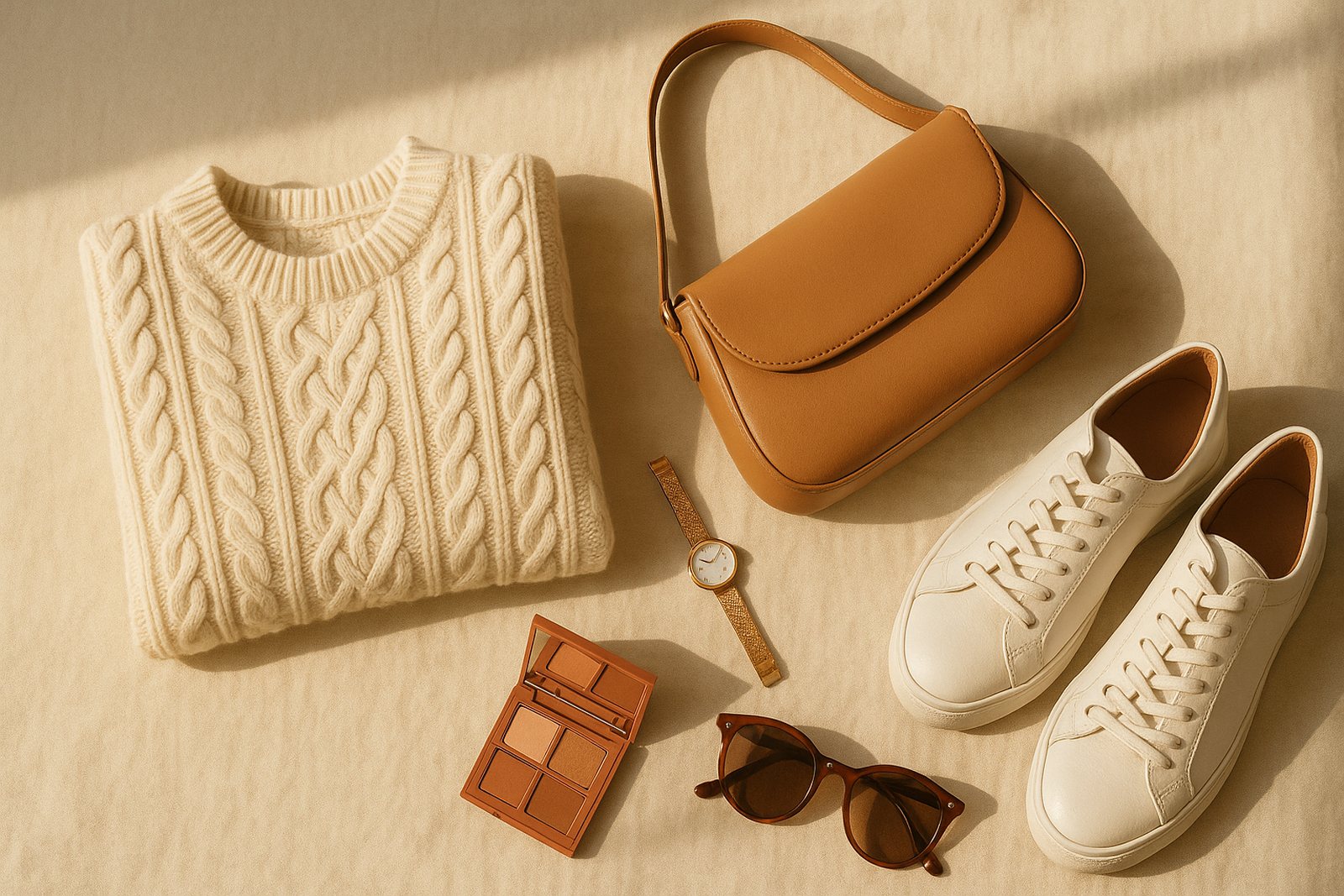
Learn how to accessorise a plain outfit: the one-metal rule, two leather tones maximum, and the three accessories worth buying fir
Women's US fashion worth buying this month: knit tops and sweaters from £9.99–£31.69, rated 4.1–4.6 stars, plus how to spot fake d
Find the best women's activewear leggings sets for under $40 — what to check for fabric quality, support, fit, and value before yo